
As featured in
Who is MVA for?
Built around your child, not the system
Whether you call it home education or homeschooling, the decision often begins with the same hope: that your child can learn well and feel well at the same time.
No two young people arrive at MVA for quite the same reason. Some need more freedom. Some need more calm. Some need more challenge. We start with the individual child, with their strengths, their needs and the life they are living, then give them the teaching, structure and support to move forward.

Athletes and performers
Around a quarter of our students train or perform seriously alongside their education. Live lessons, protected independent study and flexible learning make it possible to keep progressing without choosing between their education and the thing they love.
Families anywhere in the world
MVA students learn from more than 50 countries. Families can take a British education with them when work, travel or life moves elsewhere, with a dedicated Gulf Standard Time timetable for Years 9 and 10.
Young people ready for more
Some students arrive bored, unstretched or already working beyond their year group. We offer extension sets, ambitious subject choices and an entry year based on academic and personal fit, not simply a date of birth.
Young people who need a calmer day
For some families, attending a physical setting has become overwhelming or impossible. MVA offers a calmer route back into learning: no corridors, no crowded classrooms, cameras off when that helps, and a mentor who understands the wider story.
Neurodivergent learners
Half of our students receive SEND support, so different ways of learning are part of everyday life here. Assistive tools are built into the platform, and some of our mentors are trained SENDCOs.
Students with an EHCP
Around 13% of MVA students have an EHCP. Local-authority funding may be possible where the authority agrees that MVA is suitable provision for your child, and our team can help you understand the information it may need.
How it works
The structure they need. The freedom home education gives.
There is a reassuring rhythm to an MVA week: live teaching, independent learning, a one-to-one mentoring session and plenty of ways to take part in the wider community. Enough structure to keep learning moving. Enough space for your child to breathe.
Two to three
live lessons a day
Lessons are taught by qualified subject specialists, many with experience in UK independent schools. Several are examiners, so students learn from people who understand both their subject and the qualifications ahead.
Independent learning
with a purpose
Students work through carefully designed material on the learning platform before and after lessons. That means live time can be used for questions, discussion and applying ideas, not simply copying down notes.
A weekly one-to-one
with their mentor
The same trusted person meets your child every week. Their mentor helps them plan, notices when confidence dips, celebrates progress and keeps you informed with a weekly report.
Time to work,
and time to breathe
Independent study is protected within the timetable rather than added to the end of an already full day. Clubs, assemblies and community sessions are there too, but students can choose how much they join.
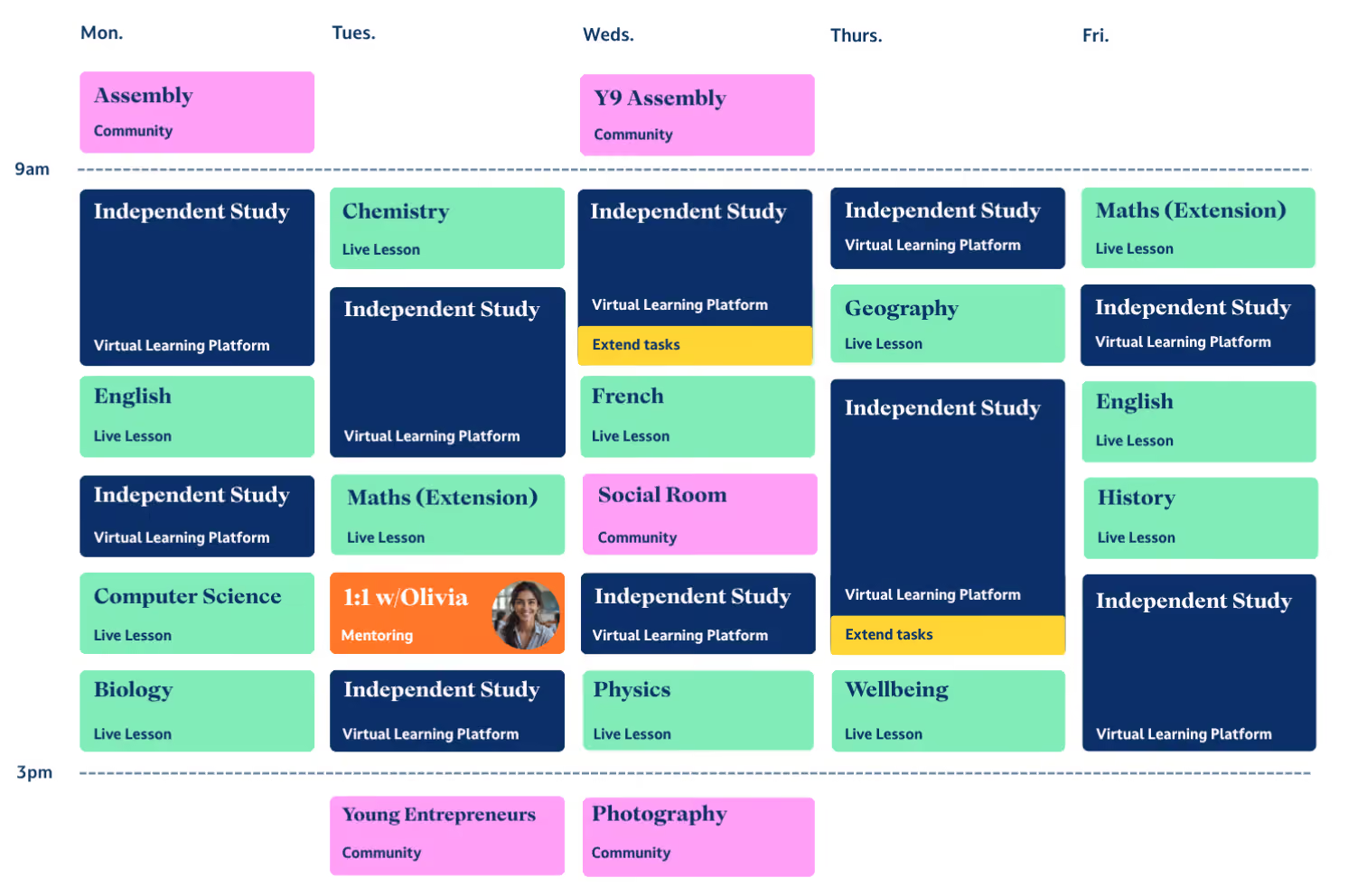
A sample MVA week includes live lessons, independent study on the learning platform, a weekly one-to-one mentoring session, assemblies, clubs and optional social sessions.
Mentoring, the heart of MVA
A trusted mentor who really knows your child
Every student is matched with a personal mentor, chosen with their personality, needs and ambitions in mind. They meet one-to-one every week, not only to talk about lessons, but to build confidence, independence and a sense of direction.
Our mentors include academics, creatives, trained SEND specialists and ex-professional athletes now building a second career.
Weekly
one-to-one session with the same trusted person
Weekly
mentor report sent directly to you
Between sessions
support by email or chat when your child needs a little extra help
“The standard of education, the flexibility, the mentoring, I can not praise it highly enough.”
Jonathan Lewis, MVA parent
Mentor report · sent to you
Maya · Week 6
Maya has settled well into her new timetable. Her confidence in Maths is visibly growing, and she volunteered an answer twice this week.
Next week, we will work on planning her independent study blocks so she can feel more confident managing her time.
Commendation · Effort
Attendance 98%
Sarah, Personal Mentor
An illustrative example of the weekly mentor report
Community, the other half of the answer
Home education should not feel lonely
Parents often worry that home education will mean fewer friendships or experiences. At MVA, community is built into the week. Students can meet people who share their interests online, then spend time together in person through trips, meet-ups and family events.
Chess Club
Art Club
Film Makers
Run Club
AI Club
Astronomy
D&D Club
Creative Writing
Debate Club
Photography
Neurodiversity Club
Cooking & Baking
MVA Podcast
Yoga & more
23
trips and events, Spring and Summer terms 2026
1,047
places booked by MVA families
1,000+
families in the community
50+
countries worldwide
Regular trips and meet-ups
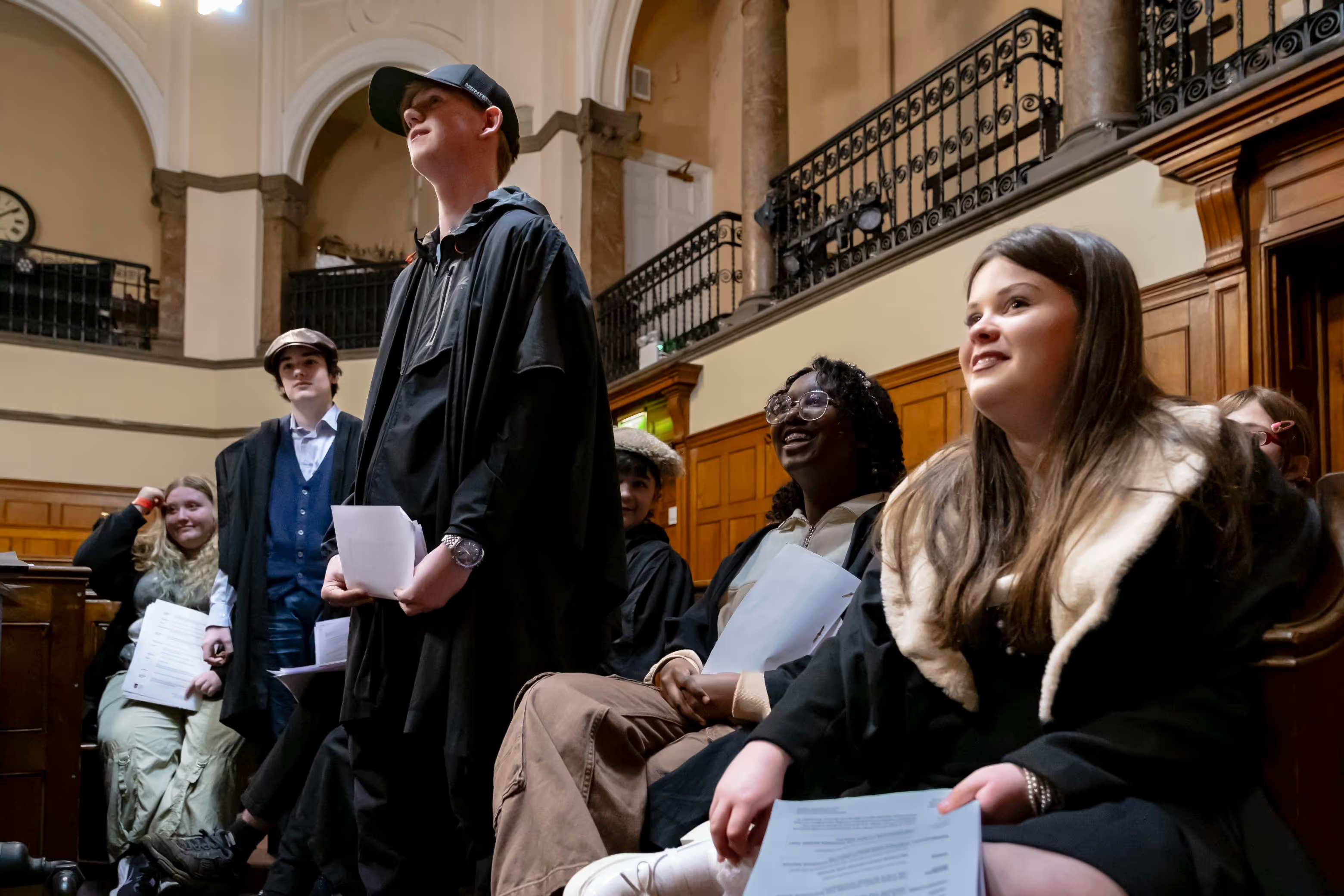
National Justice Museum

Bath
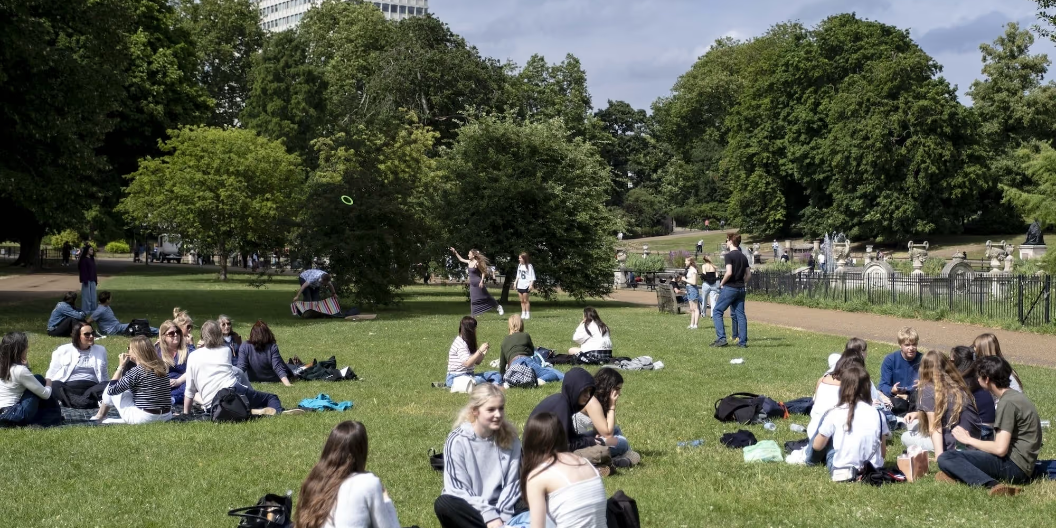
London meet-up

Summer Festival

On the track
From Bletchley Park and the Science Museum to ski trips, Duke of Edinburgh expeditions, Dubai meet-ups and the MVA Community Festival, there are plenty of chances to get out, meet properly and make memories together.
See upcoming trips and events →“It's the best school trip I've ever been on!” Ella, MVA student
And for you: a parent network on the MVA Parent App, where families find each other locally, start meet-ups and learning hubs, and share the journey.
Results, August 2026
Results we are proud of, and the young people behind them
72.2%
IGCSE grades 4 to 9
5.2 percentage points above the national average
31.7%
IGCSE grades 7 to 9
9.9 percentage points above the national average
95.9%
English Language grades 4 to 9
Our strongest subject
100%
EPQ results at A* to C
Every student who sat it
Our students learn in many different circumstances. Half receive SEND support, around 13% have an EHCP, and around a quarter combine their studies with serious athletic training.
Their results matter. So does the journey behind each one.
IGCSE 2026: MVA and the national picture
Grade 4+ (standard pass)
MVA 72.2%
National 67.0%
Grade 7+ (top grades)
MVA 31.7%
National 21.8%
Top grades at nearly 1.5 times the national rate.
Recent destinations include LSE, Sheffield, Newcastle, Surrey, Liverpool John Moores and Kent, alongside two US athletic scholarships and a place with F4 Prema Racing on the F1 Academy pathway.
Exams
Your child can sit their IGCSEs at the kitchen table
Exams can be one of the hardest parts of home educating a teenager: finding a centre that accepts private candidates, booking each subject, paying separate fees and getting there on every exam day.
For eligible Pearson Edexcel IGCSE subjects, students can sit their exams at home through Pearson's Remote Invigilation Service. Last year, 124 MVA students did exactly that, and 30.5% achieved grades 7 to 9.

Sitting exams at home
Remote invigilation is available for eligible Pearson Edexcel IGCSE subjects in Year 11. Technical, subject and eligibility requirements apply.
Using an exam centre
Exam centres are available across the UK and internationally. We help families understand the process and arrange entry for each subject.
Recognised exam boards
MVA uses Pearson Edexcel for IGCSE, and Pearson Edexcel, OCR and Cambridge Assessment for International A Level.
Exam entry fees are paid separately and are not included in tuition.
Fees, 2026/27
What home education with MVA costs
Tuition includes live lessons, weekly one-to-one mentoring, the wellbeing programme, clubs and co-curricular activities. All fees include VAT.
Best value
£9,365
per year, paid annually
Includes the £930 deposit and £95 annual subscription.
£3,550
per term
Includes the £930 deposit and £95 annual subscription. Costs more in total.
£1,100
per month, 10 payments
Excludes the £930 deposit and £95 subscription. Costs more in total.
Joining part-way through the year? Fees are calculated pro rata from the half term your child starts. Payment plans are available to UK residents; international families pay annually at US$11,950.
Are there any extra charges?
Exam entry fees are the main one. They are payable to the exam boards and are not included in tuition. Optional school trips are charged separately too.
Worth putting in context: home educating without a school isn't free either. As a private candidate you pay per exam paper, roughly £180 to £300 per GCSE subject and £350 to £550 per A Level, before a single tutor. Eight GCSE subjects can run to £2,400 in entry fees alone.
Everything else is included in the tuition above: the teaching, the timetable, the mentoring, the wellbeing programme, the clubs and the community.
Subjects and curriculum
A British curriculum, shaped around your child
Students choose from more than 20 subjects across Key Stage 3, IGCSE and International A Level. They can follow a broad programme or create a more focused path around their strengths, interests and next steps.
Years 7 and 8 · Ages 11 to 13
A broad, encouraging start to secondary learning, with time to build confidence, curiosity and good independent-study habits.
Year 7 and 8 subjectsYear 9 · Ages 13 to 14
A purposeful bridge into IGCSE, helping students discover their strengths and make confident subject choices.
Year 9 subjectsYears 10 and 11 · Ages 14 to 16
Recognised IGCSE qualifications, taught by subject specialists with structured revision, mentoring and support through the exam process.
Year 10 and 11 subjectsSixth Form · Ages 16 to 18
International A Levels and selected vocational pathways, with expert teaching, personal mentoring and guidance towards university, sport, work or whatever comes next.
Sixth Form subjectsYears 11 and 13 are currently closed to new enrolment. Every other year group has entry points each term.
Questions
What home-educating parents ask us most
Is this home education, or a school?
Both, in a sense. MVA is accredited by the Department for Education as a provider of online education, so technically your child is home educated: they remain electively home educated and you keep legal responsibility for their education. Structurally, though, we run as a school. There are more than 200 teachers and mentors, a full senior leadership team, a timetable, assemblies, reports and a pastoral system behind every student. What changes when you join is not your legal position. It is that you are no longer doing it alone.
Is home education legal in the UK?
Yes. In England, parents are responsible for making sure their child receives a suitable full-time education, either through attendance at school or otherwise. Home education is that 'otherwise'. Rules differ across the UK, so families should always check the current guidance for their nation.
Do I need permission to home educate?
The process depends on where you live and your child's circumstances. In England, parents will usually need to write to the school before withdrawing a child, but additional consent or safeguarding rules can apply, particularly for some children with complex needs, children at special schools, and children subject to a school attendance order. Check current official guidance before deregistering.
Do I need to be a qualified teacher?
No. And with MVA, you are not expected to teach each subject yourself. Our qualified subject specialists provide the lessons, learning materials and feedback; your child's mentor helps them stay organised and keeps you informed.
What does an MVA week look like?
Most students have two to three live lessons a day, protected independent study and a weekly one-to-one session with their mentor. Assemblies, clubs and social sessions run throughout the week, so your child can choose how much they want to join.
Will the local authority check on us?
Your local authority may ask for information to understand whether your child is receiving a suitable education. We can provide attendance records, termly reports and confirmation of the programme your child follows with MVA.
Can I work while my child learns with MVA?
Many MVA parents do. How much day-to-day supervision your child needs will depend on their age, confidence and ability to work independently. MVA provides the timetable, teaching and academic support; their mentor keeps you informed. A younger or less independent learner may still need more help from an adult at home.
What support is there for SEND and EHCPs?
Half of our students receive SEND support and around 13% have an EHCP. Some mentors are trained SENDCOs, and assistive tools are built into the learning platform. Local-authority funding may be possible where the authority agrees that MVA is suitable provision for your child.
Will my child make friends?
Students can join clubs, assemblies, social sessions and trips throughout the year. The MVA Parent App also helps families find one another locally and arrange meet-ups and learning hubs. There is no pressure to join everything, but the opportunities are there.
Can my child return to school later?
Yes, although a place at their previous setting cannot be guaranteed. MVA students work towards recognised IGCSE and International A Level qualifications, so their learning and qualifications can move with them.
Can MVA students go to university?
Yes. Recent MVA leavers have progressed to universities including LSE, Sheffield, Newcastle, Surrey, Liverpool John Moores and Kent, as well as sport and performance pathways in the UK and overseas.
Can we join part-way through the year?
Usually, yes. MVA offers several entry points throughout the year and calculates fees pro rata from the half term your child joins. Availability varies by year group, and Years 11 and 13 may close earlier because of the exam timetable.
What if we live outside the UK?
Around a quarter of MVA families live outside the UK. We generally recommend learning within five hours of UK time, and we offer a Gulf Standard Time timetable for Years 9 and 10. Home-education rules vary by country, so check the local requirements where you live.
How do I take my child off the school roll?
The process depends on your nation and your child's circumstances. In England, families will often write to the head teacher to say they are choosing elective home education. The school then follows the required deregistration and local-authority process. Check the latest official guidance before acting, especially if your child has an EHCP, attends a special school or is subject to a school attendance order.
What about children-not-in-school registers?
The Children's Wellbeing and Schools Act 2026 introduced new registration duties and related requirements in England. How these apply will depend on commencement arrangements and your family's circumstances. Learning with MVA does not turn elective home education into attendance at a physical school, but we can provide clear records of the education your child receives.
We’re proud of our school, especially when our students and families say so.
From press articles and case studies to heartfelt emails sent to our teachers, here’s what our students and families say about life at MVA.


-min.avif)


Start flexible education today
Help & Support
Need a hand? Whether you’re a current family or just starting to explore MVA, our team is here to help with anything you need.

Download Prospectus
Get the full picture of life at MVA - from how our lessons work to everything we offer beyond the classroom.
.avif)
.avif)

Book a Discovery Call
Want to chat with a real person? Meet our team, ask your questions, and find out if MVA is the right fit for your family.
